1

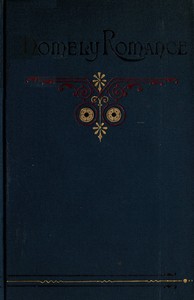
Warlock o' Glenwarlock: A Homely Romance — Text and Context
(0 User reviews)
46
Project Gutenberg
2004
Not confirmed
Christian fiction; Highlands (Scotland) -- Fiction
Readers of public-domain and historical texts
Project Gutenberg digital edition
en
Edition facts
Words
188,728
Reading time
821 min
Text sections
65
Warlock o' Glenwarlock: A Homely Romance — Text and Context can be approached with a clearer sense of reading commitment from its source measurements: 188,728 words, 13 hr 41 min estimated reading time, and 65 detected text sections.
The text analysis averages about 20.4 words per sentence, while the detected sections provide another way to judge how the source is divided.
Project Gutenberg metadata also associates the work with “Christian fiction,” connecting these edition facts with the source record’s subject description.
Source:
Project Gutenberg record #6364
In a Scottish glen where heather and boulders outnumber trees, young Cosmo Warlock navigates a decaying estate, a reclusive father obsessed with 'stinks' (chemical experiments), and a proud, isolated sister. MacDonald's homely romance contrasts rough dialect with philosophical reflection, grounding spiritual themes in the grit of poverty and neglect.
Editorial Edition Score
4.9/5
★★★★★
★★★★★
Calculated from edition completeness, EPUB availability, text structure and catalogue metadata. Not a user rating.
How this score is calculated
- Description quality20 pts
- Title & short description10 pts
- Source metadata20 pts
- Text length15 pts
- Chapters / structure15 pts
- EPUB file integrity20 pts
Total of 100 points, scaled to a 2.5-5.0 range. Editions with an empty description or a missing EPUB file are not scored.
Edition quality
Read the Text
A rough, wild glen it was, to which, far back in times unknown to its annals, the family had given its name, taking in return no small portion of its history, and a good deal of the character of its individuals. It lay in the debatable land between highlands and lowlands; most of its inhabitants spoke both Scotch and Gaelic; and there was often to be found in them a notable mingling of the chief characteristics of the widely differing Celt and Teuton. The country produced more barley than wheat, more oats than barley, more heather than oats, more boulders than trees, and more snow than anything. It was a solitary, thinly peopled region, mostly of bare hills, and partially cultivated glens, each with its small stream, on the banks of which grew here and there a silver birch, a mountain ash, or an alder tree, but with nothing capable of giving much shade or shelter, save cliffy banks and big stones. From many a spot you might look in all directions and not see a sign of human or any other habitation. Even then however, you might, to be sure, most likely smell the perfume--to some nostrils it is nothing less than perfume--of a peat fire, although you might be long in finding out whence it came; for the houses, if indeed the dwellings could be called houses, were often so hard to be distinguished from the ground on which they were built, that except the smoke of fresh peats were coming pretty freely from the wide-mouthed chimney, it required an experienced eye to discover the human nest. The valleys that opened northward produced little; there the snow might some years be seen lying on patches of oats yet green, destined now only for fodder; but where the valley ran east and west, and any tolerable ground looked to the south, there things put on a different aspect. There the graceful oats would wave and rustle in the ripening wind, and in the small gardens would lurk a few cherished strawberries, while potatoes and peas would be tolerably plentiful in their season.
Upon a natural terrace in such a slope to the south, stood Castle Warlock. But it turned no smiling face to the region whence came the warmth and the growth. A more grim, repellant, unlovely building would be hard to find; and yet, from its extreme simplicity, its utter indifference to its own looks, its repose, its weight, and its gray historical consciousness, no one who loved houses would have thought of calling it ugly. It was like the hard-featured face of a Scotch matron, suggesting no end of story, of life, of character: she holds a defensive if not defiant face to the world, but within she is warm, tending carefully the fires of life. Summer and winter the chimneys of that desolate-looking house smoked; for though the country was inclement, and the people that lived in it were poor, the great, sullen, almost unhappy-looking hills held clasped to their bare cold bosoms, exposed to all the bitterness of freezing winds and summer hail, the warmth of household centuries: their peat-bogs were the store-closets and wine-cellars of the sun, for the hoarded elixir of physical life. And although the walls of the castle, as it was called, were so thick that in winter they kept the warmth generated within them from wandering out and being lost on the awful wastes of homeless hillside and moor, they also prevented the brief summer heat of the wayfaring sun from entering with freedom, and hence the fires were needful in the summer days as well--at least at the time my story commences, for then, as generally, there were elderly and aged people in the house, who had to help their souls to keep their bodies warm.
The opening chapter of Warlock o' Glenwarlock situates the reader in a landscape where 'more heather than oats, more boulders than trees, and more snow than anything' sets the stage for a story rooted in material scarcity and moral endurance. The narrative voice shifts between broad Scots dialect—as when the gardener Grizzie complains of the old lord's cursing and the present lord's neglect—and a more formal, reflective English, creating a linguistic tension that mirrors the social divisions within Castle Warlock.
MacDonald's subtitle, 'A Homely Romance,' signals a focus on domestic and spiritual rather than dramatic or adventurous plots. The excerpts reveal a household shaped by absence: the present lord rarely dines with his sister, the garden lies in 'disgracefu' condeetion,' and the young heir Cosmo returns to a place where even the neighbours keep their distance. The romance, if it emerges, will have to contend with this atmosphere of isolation and decay.
A Landscape of Neglect
The physical setting is not merely backdrop but active character. The glen produces 'more boulders than trees,' and the castle's garden is described by Grizzie as a 'ruin' beyond bearing. The present lord, absorbed in his 'boaratory' (laboratory), has let the estate fall into disrepair. This neglect extends to human relationships: the lord's sister, 'a bonnie lass like her,' wanders the place with no better company than 'an auld buik.' Poverty and pride isolate her from neighbours who would court her if she were rich. The landscape thus becomes a mirror of social and emotional barrenness, where even the peat fire's perfume—'to some nostrils it is nothing less than perfume'—hints at a harsh beauty that only the patient can appreciate.
Voices in Conflict: Dialect and Dignity
The excerpts showcase a deliberate clash of registers. Grizzie's Scots is vigorous and earthy: 'cursin’ an’ sweirin’ as gien he had sellt his sowl to a’ the deevils thegither.' His speech carries the weight of lived experience, of bearing with neglect 'till I cam by beirin’ o’ ’t to tak it verra quaiet.' In contrast, the narrator's English is measured and philosophical. This linguistic divide is not merely decorative; it reflects class and education, but also a deeper tension between resignation and resistance. Grizzie's account of the trustees who 'caredna a bodle' and the lord who 'does naething but rowt aboot in ’s boaratory' reveals a world where authority is absent or indifferent. The dignity of the common folk, expressed in their own tongue, stands against the silent neglect of their superiors.
The Unseen Romance: Absence and Anticipation
Despite the subtitle, the excerpts offer no direct romantic encounter. Instead, they build a structure of absence: the lord's sister is 'naething but bonny' yet 'has naething,' and the neighbours shun her. The young doctor is mentioned as a 'kin’ o’ a freen’' who 'likes stinks,' hinting at a possible connection through the lord's scientific interests. Cosmo, the likely hero, appears only as a listener to Grizzie's complaints. The romance, if it develops, will emerge from this void—from the tension between what is present (neglect, poverty, pride) and what is longed for (companionship, restoration, love). MacDonald's method is to delay gratification, building expectation through the very lack of it.
Readers approaching Warlock o' Glenwarlock should attend to the interplay of voices—the Scots of the servants and the English of the narrator—as a key to the novel's moral landscape. The homely romance is not a swift courtship but a slow cultivation of patience and perception, much like Grizzie's endurance of the garden's ruin. Look for how small discoveries (a 'small discovery,' a 'greater discovery' in the chapter titles) gradually transform the desolate setting into a place where grace might take root.
The rain kept time with Cosmo’s stubborn hope that afternoon, his father’s stinks curling through the cold hall like questions without answers. When I finally set Warlock o’ Glenwarlock down, my hand drifted, half-absent, to Isobel : A Romance of the Northern Trail — Context and Discussion. That same raw loneliness, but under wider skies. Some stories just follow you.
There are no reviews for this eBook.
There are no comments for this eBook.
Reader reflection
Your personal reading reflection
Build a private reading journal entry for this title.
Your progress
0
/
10
2
Was reading this book enjoyable?
3
Is this a title you would suggest to others?
4
How demanding did the text feel?
5
Did any part of the book stay with you emotionally?
6
What was the strongest part of the book?
7
Did it raise ideas you would like to talk about?
8
Would a second reading be valuable?
9
What is the main idea you are taking away?
10