1

The Three Clerks — Edition Insights
(0 User reviews)
902
Project Gutenberg
2005
Not confirmed
London (England) -- Fiction; Civil service -- Fiction
Readers of public-domain and historical texts
Project Gutenberg digital edition
en
Edition facts
Words
222,559
Reading time
968 min
Text sections
24
The source record for The Three Clerks — Edition Insights measures this digital text at 222,559 words, 16 hr 8 min estimated reading time, and 24 detected text sections.
The text analysis averages about 19.4 words per sentence, while the detected sections provide another way to judge how the source is divided.
Project Gutenberg metadata also associates the work with “London (England) -- Fiction,” connecting these edition facts with the source record’s subject description.
Source:
Project Gutenberg record #7481
Trollope's novel follows three clerks navigating ambition, romance, and corruption in mid-Victorian London's civil service, using contrasting domestic and parliamentary settings to expose moral compromises.
Editorial Edition Score
4.9/5
★★★★★
★★★★★
Calculated from edition completeness, EPUB availability, text structure and catalogue metadata. Not a user rating.
How this score is calculated
- Description quality20 pts
- Title & short description10 pts
- Source metadata20 pts
- Text length15 pts
- Chapters / structure15 pts
- EPUB file integrity20 pts
Total of 100 points, scaled to a 2.5-5.0 range. Editions with an empty description or a missing EPUB file are not scored.
Edition quality
Read the Text
Norman was difficult. At first he appears to be a lay-figure, a priggish dummy of an immaculate hero, a failure in portraiture; but toward the end of the book it is borne in on us that our dislike had been aroused by the lifelike nature of the painting, dislike toward a real man, priggish indeed in many ways, but with a very human strain of obstinacy and obdurateness, which few writers would have permitted to have entered into the make-up of any of their heroes. Of the other men, Undy Scott may be named as among the very best pieces of portraiture in Victorian fiction; touch after touch of detail is added to the picture with really admirable skill, and Undy lives in the reader's memory as vividly as he must have existed in the imagination of his creator. There are some strong and curious passages in Chapter XLIV, in which the novelist contrasts the lives and fates of Varney, Bill Sykes and Undy Scott; they stir the blood, proving uncontestibly that Undy Scott was as real to Trollope as he is to us: 'The figure of Undy swinging from a gibbet at the broad end of Lombard Street would have an effect. Ah, my fingers itch to be at the rope.'
Trollope possessed the rare and beautiful gift of painting the hearts and souls of young girls, and of this power he has given an admirable example in Katie Woodward. It would be foolish and cruel to attempt to epitomize, or rather to draw in miniature, this portrait that Trollope has drawn at full length; were it not for any other end, those that are fond of all that is graceful and charming in young womanhood should read _The Three Clerks_, so becoming the friend, nay, the lover of Katie. Her sisters are not so attractive, simply because nature did not make them so; a very fine, faithful woman, Gertrude; a dear thing, Linda. All three worthy of their mother, she who, as we are told in a delicious phrase, 'though adverse to a fool' 'could sympathize with folly '.
These eight portraits are grouped in the foreground of this 'conversation' piece, the background being filled with slighter but always live figures.
Particularly striking, as being somewhat unusual with Trollope, is the depiction of the public-house, 'The Pig and Whistle', in Norfolk Street, the landlady, Mrs. Davis, and the barmaid, Norah Geraghty. We can almost smell the gin, the effluvia of stale beer, the bad tobacco, hear the simpers and see the sidlings of Norah, feel sick with and at Charley:--he 'got up and took her hand; and as he did so, he saw that her nails were dirty. He put his arms round her waist and kissed her; and as he caressed her, his olfactory nerves perceived that the pomatum in her hair was none of the best ... and then he felt very sick'. But, oh, why 'olfactory nerves'? Was it vulgar in early Victorian days to call a nose a nose?
How far different would have been Dickens's treatment of such characters and such a scene; out of Mrs. Davis and Norah he would have extracted fun, and it would never have entered into his mind to have brought such a man as Charley into contact with them in a manner that must hurt that young hero's susceptibilities. Thackeray would have followed a third way, judging by his treatment of the Fotheringay and Captain Costigan, partly humorous, partly satirical, partly serious.
Trollope was not endowed with any spark of wit, his satire tends towards the obvious, and his humour is mild, almost unconscious, as if he could depict for us what of the humorous came under his observation without himself seeing the fun in it. Where he sets forth with intent to be humorous he sometimes attains almost to the tragic; there are few things so sad as a joke that misses fire or a jester without sense of humour.
Trollope structures The Three Clerks around a series of sharply contrasting locales—from the claustrophobic corridors of the Weights and Measures office to the open air of Bushey Park and the drawing rooms of Hampton Court. The narrative moves between these spaces with deliberate rhythm, often using a single chapter to trace a character’s trajectory from a committee room to a domestic interior, as when Alaric Tudor’s railway dealings are debated over dinner and then immediately followed by the ladies’ talk of dance steps. This alternation between public and private spheres is not merely scenic; it underscores the permeability of professional ethics and personal desire.
The Office as Stage
The opening chapters establish the Weights and Measures office as a microcosm of bureaucratic hierarchy. Trollope lingers on the physical details of the clerks’ desks, the ritual of signing documents, and the subtle gradations of rank. The narrator notes that “the three clerks” are distinguished not only by their duties but by their posture toward authority: one is deferential, one calculating, one restless. The office itself becomes a recurring image—a place where reputations are made and unmasked, as when Alaric’s promotion triggers whispered resentments. Trollope uses the office’s fixed routines to highlight the precariousness of the clerks’ positions; a single misstep in a ledger or a misplaced trust can unravel years of steady work.
Movement Between Worlds
The novel’s structure depends on rapid shifts between settings that carry symbolic weight. A chapter titled “Bushey Park” offers a pastoral interlude where the characters’ social masks slip, while “The Internal Navigation” plunges back into the murky waters of railway speculation. Trollope often pairs a scene of domestic intimacy—a fireside conversation, a ball—with a subsequent scene of official inquiry or financial negotiation. This juxtaposition is most pointed in the sequence where Undy Scott’s cynical remarks about the fallen M’Buffer are followed by Alaric’s troubled silence. The reader is left to measure the distance between the drawing-room’s polite fictions and the boardroom’s ruthless calculations.
Recurring Images of Entrapment
Throughout the excerpts, Trollope returns to images of confinement and escape. The clerks are described as “navvies” laboring in a metaphorical ditch; the railway line to Ballydehob becomes a trap for investors; and characters repeatedly find themselves “steeped in Cimmerian darkness” when their schemes fail. Even the domestic spaces—Mrs. Val’s carefully managed parties, the Woodward family’s parlor—are presented as arenas of constraint, where social performance is mandatory. The word “crinoline” appears as a marker of both fashion and restriction, and the title of one chapter, “Crinoline and Macassar; or, My Aunt’s Will,” explicitly links personal appearance to inheritance and obligation.
The Weight of Dialogue
Trollope’s dialogue carries much of the novel’s moral argument. In the excerpted conversation between Alaric and Undy, the latter’s casual defense of M’Buffer—“he has had his fling for thirteen years, and that’s something”—reveals a worldview in which success is measured by duration, not integrity. Alaric’s responses grow shorter and more reflective, signaling his internal conflict. The dialogue is laced with financial metaphors: “brought his pigs to a bad market,” “lived on the fat of the land.” These phrases root abstract ethical questions in the concrete language of commerce. Trollope rarely editorializes directly; instead, he lets the characters’ own words expose their values, leaving the reader to judge the gap between what is said and what is done.
Readers attentive to Trollope’s craft will notice how the novel’s chapter titles—often whimsical or allusive—function as signposts for the shifts in tone and setting. The movement from “The Three Kings” to “Consolation” to “Very Sad” traces an emotional arc that mirrors the clerks’ fortunes. Pay particular attention to the way Trollope uses the physical environment—a closed door, a crowded room, a walk along the Thames—to signal changes in power and intimacy. These details, rather than grand plot turns, are where the novel’s deepest tensions reside.
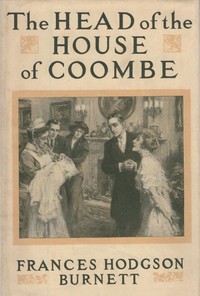
Returning to The Three Clerks, I kept thinking about how ambition quietly corrodes the domestic sphere, how the ledger’s neat columns hide so much mess. That same ache surfaced while rereading The Head of the House of Coombe — Themes and Context, where privilege taints childhood itself. Both books linger on the cost of pretending things are orderly when they never truly are.
There are no reviews for this eBook.
There are no comments for this eBook.
Reader reflection
Take a moment to reflect on this book
Create a short personal record of your experience with this book.
Your progress
0
/
10
2
What was your overall reaction to the book?
3
Would you pass this book on to a friend?
4
Did the language feel accessible?
5
Did any part of the book feel personally relevant?
6
How much did the book move you?
7
Which aspect of the book did you value most?
8
How well did it match your expectations?
9
In one sentence, what did you learn?
10