1

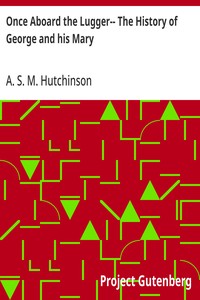
Once Aboard the Lugger-- The History of George and his Mary — Edition Insights
(0 User reviews)
47
Project Gutenberg
2004
Not confirmed
Fiction; Humorous stories
Readers of public-domain and historical texts
Project Gutenberg digital edition
en
Edition facts
Words
110,242
Reading time
480 min
Text sections
15
The source record for Once Aboard the Lugger-- The History of George and his Mary — Edition Insights measures this digital text at 110,242 words, 8 hr estimated reading time, and 15 detected text sections.
The text analysis averages about 11.7 words per sentence, while the detected sections provide another way to judge how the source is divided.
Project Gutenberg metadata also associates the work with “Fiction,” connecting these edition facts with the source record’s subject description.
Source:
Project Gutenberg record #6410
A comic novel about George and his Mary, featuring a protagonist who uses pencilled notes to navigate conversations with his uncle Mr. Marrapit, whose obsession with cats drives much of the plot's tension.
Editorial Edition Score
4.8/5
★★★★★
★★★★★
Calculated from edition completeness, EPUB availability, text structure and catalogue metadata. Not a user rating.
How this score is calculated
- Description quality20 pts
- Title & short description10 pts
- Source metadata20 pts
- Text length15 pts
- Chapters / structure15 pts
- EPUB file integrity20 pts
Total of 100 points, scaled to a 2.5-5.0 range. Editions with an empty description or a missing EPUB file are not scored.
Edition quality
Read the Text
Excursions In A Garden.
Mr. Christopher Marrapit is dozing in a chair upon the lawn; his darling cat, the Rose of Sharon, is sleeping on his lap; stiffly beside him sits Mrs. Major, his companion--that masterly woman.
As we approach to be introduced, it is well we should know something of Mr. Marrapit. The nervous business of adventuring into an assembly of strangers is considerably modified by having some knowledge of the first we shall meet. We feel more at home; do not rush upon subjects which are distasteful to that person, or of which he is ignorant; absorb something of the atmosphere of the party during our exchange of pleasantries with him; and, warmed by this feeling, with our most attractive charm of manner are able to push among the remainder of our new friends.
Unhappily, the friendly chatter of the neighbourhood, which should supply us with something of the character of a resident, is quite lacking at Paltley Hill in regard to Mr. Marrapit. Mr. Marrapit rarely moves out beyond the fine wall that encircles Herons' Holt, his residence; with Paltley Hill society rarely mixes. The vicar, with something of a frown, might tell us that to his divers parochial subscription lists Mr. Marrapit has consistently, and churlishly, refused to give a shilling. Professor Wyvern's son, Mr. William Wyvern, has been heard to say that Mr. Marrapit always reminded him “of one of the minor prophets--shaved.” Beyond this--and how little helpful it is!--Paltley Hill society can give us nothing.
In a lower social grade of the district, however, much might be learned. In the kitchens, the cottages, and the bar-parlours of Paltley Hill, Mr. Marrapit is considerably discussed. Nicely mannered as we are, servants' gossip concerning one in our own station of life is naturally distasteful to us. At the same time it is essential to our ease on being introduced that we should know something of this gentleman. Assuring ourselves, therefore, that we shall not be prejudiced by cheap chatter, let us hear what the kitchens, the cottages, and the bar-parlours have to say.
Let it, at least, be written down; we shall know how to value such stuff.
Material for this gossip, then, is brought into the kitchens, the cottages, and the bar-parlours by Mr. Marrapit's domestic staff.
Mrs. Armitage, his cook, has given tales of his “grimness” to the cottages where her comfortable presence is welcomed on Sunday and Thursday afternoons. She believes, however, that he must be a “religious gentleman,” because (so she says) “he talks like out of the Bible.”
This would seem to bear out Mr. William Wyvern's allusion to the minor prophet element of his character.
It is the habit of Clara and Ada, his maids, squeezing at the gate from positions dangerous to modesty into which their ardent young men have thrust them--it is their habit, thus placed, to excuse themselves from indelicate embraces by telling alarming tales of Mr. Marrapit's “carrying on” should they be late. He is a “fair old terror,” they say.
The testimony of Mr. Fletcher, his gardener, gloomy over his beer in the bar-parlours, seems to support the “stinginess” that the vicar has determined in Mr. Marrapit's character. Mr. Fletcher, for example, has lugubriously shown what has to be put up with when in the service of a man who had every inch of the grounds searched because a threepenny bit had been dropped. “It's 'ard--damn 'ard,” Mr Fletcher said on that occasion. “I'm a gardener, I am; not a treasure-'unter.” Murmurs of sympathy chorused endorsement of this view.
Finally there are the words of Frederick, son of Mrs. Armitage, and assistant to Fletcher, whose pleasure it is to set on end the touzled hair of the youth of Paltley Hill by obviously exaggerated stories of Mr. Marrapit's grim rule.
“'E's a tryant,” Frederick has said.
Such is an epitome of the kitchen gossip concerning Mr. Marrapit; it is wholesome to be away from such tattling, and personally to approach the lawn whereon its subject sits.
This lawn, a delectable sight on this fine July afternoon, is set about with wire netting to a height of some six feet. By the energies of Mr. Fletcher and Frederick the sward is exquisitely trimmed and rolled; and their labours join with the wire netting to make the lawn a safe and pleasant exercise ground for Mr. Marrapit's cats.
The novel opens with George preparing for a conversation with his uncle Mr. Marrapit by consulting notes pencilled on his cuffs. This detail—a man literally scripting his dialogue on his shirt—sets the tone for a story where earnestness and absurdity collide. The excerpts reveal a household ruled by Mr. Marrapit's devotion to his cats, which he treats as creatures of 'gentle birth' and 'inherent delicacy.' George, a medical trainee, must navigate his uncle's theatrical grief and stern commands, using flattery and feigned remorse to steer events. The narrative voice is arch and playful, with chapter titles like 'Excursions In A Garden' and 'Upon Modesty In Art: And Should Be Skipped' signaling a self-aware, digressive style.
Scripted Conversations and the Comedy of Deception
George's reliance on written notes during a critical talk with Mr. Marrapit reveals a central comic mechanism: the gap between prepared speech and spontaneous feeling. He 'absorbed Note I' before speaking, then 'skipped to Note 3' when his uncle rebuffed him. The notes dictate not only what he says but also his gestures—'George acted as Note 4 bade him'—turning the dialogue into a performance. Mr. Marrapit, for his part, responds with biblical gravity ('Let the dead bury the dead') and demands that George 'solve' his own conundrum. The scene is a duet of manipulation: George pretends to love the cats to gain influence, while Mr. Marrapit, though moved, remains suspicious. This pattern of calculated confession and theatrical remorse recurs throughout the excerpts, suggesting a world where sincerity is a strategic pose.
Cats as Moral Barometers and Plot Drivers
Mr. Marrapit's cats are not mere pets but moral arbiters. George's strategy hinges on claiming a 'deep affection' for them, and he invents risks—poison, beatings, 'furious dogs'—to alarm his uncle. The cats' 'refined' nature mirrors the household's pretensions to gentility; a drunken housekeeper is a threat not just to order but to breeding. The chapter titles 'Of Twin Cats: Of Ananias And Of Sapphira' (Book VI) explicitly link the animals to biblical deceit, while 'The Rape Of The Rose' (Book V) suggests a crime against beauty. Though the excerpts do not reveal the full plot, the cats clearly serve as catalysts for conflict, forcing characters to reveal their priorities. George's feigned concern and Mr. Marrapit's genuine anguish both revolve around these creatures, making them the emotional and comic center of the domestic drama.
Digressive Structure and the Author's Intrusions
The novel's table of contents announces a playful attitude toward narrative convention. Chapters like 'Upon Modesty In Art: And Should Be Skipped' and 'Prosiness Upon Events: So Uneventful That It Should Be Skipped' invite the reader to skip, while 'The Author Meanders Upon The Enduring Hills; And The Reader Will Lose Nothing By Not Accompanying Him' openly mocks its own digressions. This self-deprecating frame suggests a narrator who is both indulgent and ironic, aware that the story's pleasures lie in detours. The 'Author's Advertisement of His Novel' further blurs the line between preface and fiction. In the excerpts, the prose is dense with parenthetical asides and theatrical stage directions ('He paused brightly'), reinforcing the sense of a performance directed by the author. Readers should expect a leisurely, episodic journey rather than a tightly plotted romance.
Readers approaching Once Aboard the Lugger should attend to the interplay between George's calculated performances and Mr. Marrapit's volatile dignity. The novel rewards patience with its digressions, which often contain the sharpest comedy. Pay particular attention to the cats: they are never merely background. The excerpts suggest a story built on contrasts—between sincerity and artifice, domestic order and chaos, love and manipulation—that the full text likely develops with increasing complexity.
George’s pencilled notes to his uncle felt achingly familiar, that quiet scramble to keep peace. It stayed with me like a half-finished doodle. There’s a similar gentle ache in At the Sign of the Eagle — Edition Insights, a softer loneliness tucked beneath the wit, the way real lives often hide their tenderness in plain sight.
There are no reviews for this eBook.
There are no comments for this eBook.
Reader reflection
How did this book work for you?
Your answers remain private and are stored only in this browser.
Your progress
0
/
10
2
How much did you enjoy the reading experience?
3
Would you pass this book on to a friend?
4
How easy was the book to follow?
5
How understandable was the text?
6
Did you gain anything practical from the text?
7
How personally connected did you feel to the book?
8
Did the story or argument move comfortably?
9
What did this book teach you most?
10