1


Ideala — Edition Insights
(0 User reviews)
63
Project Gutenberg
2004
Not confirmed
Feminists -- England -- Fiction
Readers of public-domain and historical texts
Project Gutenberg digital edition
en
Edition facts
Words
72,370
Reading time
315 min
Text sections
7
Before opening Ideala — Edition Insights, the edition data offers a quick orientation: 72,370 words, 5 hr 15 min estimated reading time, and 7 detected text sections.
The text analysis averages about 19.2 words per sentence, while the detected sections provide another way to judge how the source is divided.
Project Gutenberg metadata also associates the work with “Feminists -- England -- Fiction,” connecting these edition facts with the source record’s subject description.
Source:
Project Gutenberg record #6855
Sarah Grand's 1888 novel traces a woman's intellectual and emotional evolution through a series of candid conversations and introspective passages, marked by a distinctive narrative voice that treats the protagonist's opinions as provisional and her mind as a work in progress.
Editorial Edition Score
4.7/5
★★★★★
★★★★★
Calculated from edition completeness, EPUB availability, text structure and catalogue metadata. Not a user rating.
How this score is calculated
- Description quality20 pts
- Title & short description10 pts
- Source metadata20 pts
- Text length15 pts
- Chapters / structure15 pts
- EPUB file integrity20 pts
Total of 100 points, scaled to a 2.5-5.0 range. Editions with an empty description or a missing EPUB file are not scored.
Edition quality
Read the Text
She came among us without flourish of trumpets. She just slipped into her place, almost unnoticed, but once she was settled there it seemed as if we had got something we had wanted all our lives, and we should have missed her as you would miss the thrushes in the spring, or any other sweet familiar thing. But what the secret of her charm was I cannot say. She was full of inconsistencies. She disliked ostentation, and never wore those ornamental fidgets ladies delight in, but she would take a piece of priceless lace to cover her head when she went to water her flowers. And she said rings were a mistake; if your hands were ugly they drew attention to them, if pretty they hid their beauty; yet she wore half-a-dozen worthless ones habitually for the love of those who gave them, to her. It was said that she was striking in appearance, but cold and indifferent in manner. Some, on whom she had never turned her eyes, called her repellent. But it was noticed that men who took her down to dinner, or had any other opportunity of talking to her, were never very positive in, what they said of her afterwards. She made every one, men and women alike, feel, and she did it unconsciously. Without effort, without eccentricity, without anything you could name or define, she impressed you, and she held you --or at least she held _me_, always--expectant. Nothing about her ever seemed to be of the present. When she talked she made you wonder what her past had been, and when she was silent you began to speculate about her future. But she did not talk much as a rule, and when she did speak it was always some subject of interest, some fact that she wanted to ascertain accurately, or some beautiful idea, that occupied her; she had absolutely no small talk for any but her most intimate friends, whom she was wont at times to amuse with an endless stock of anecdotes and quaint observations; and this made people of limited capacity hard on her. Some of these called her a cold, ambitious, unsympathetic woman; and perhaps, from their point of view, she was so. She certainly aspired to something far above them, and had nothing but scorn for the dead level of dull mediocrity from which they would not try to rise.
"To be distinguished among these people," she once said, "it is only necessary to have one's heart
Dowered with the hate of hate, the scorn of scorn, The love of love.
There is no need to _do_ anything; if you have the right _feeling_ you may be as passive as a cow, and still excel them all, for they never thrill to a noble thought."
"Then, pity them," I said.
"No, despise them," she answered. "Pity is for affliction, for such shortcomings as are hereditary and can hardly be remedied--for the taint in nature which is all but hopeless. But these people are not afflicted. They could do better if they would. They know the higher walk, and deliberately pursue the lower. Their whole feeling is for themselves, and such things as have power to move them through the flesh only. I would almost rather sin on the impulse of a generous but misguided nature, and have the power to appreciate and the will to be better, than live a perfect, loveless woman, caring only for myself, like these. I should do more good."
They called Ideala unsympathetic, yet I have known her silent from excess of sympathy. She could walk with you, reading your heart and soul, sorrowing and rejoicing with you, and make you feel without a word that she did so. It was this power to sympathise, and the longing she had to find good in everything, that made her forgive the faults that were patent in a nature with which she was finally brought into contact, for the sake of the virtues which she discovered hidden away deep down under a slowly hardening crust of that kind of self- indulgence which mars a man.
But her own life was set to a tune that admitted of endless variations. Sometimes it was difficult even for those who knew her best to detect the original melody among the clashing cords that concealed it; but, let it be hidden as it might, one felt that it would resolve itself eventually, through many a jarring modulation and startling cadence, perhaps, back to the perfect key.
From its preface onward, Ideala announces itself as a study of a mind in transition. Sarah Grand explicitly warns readers not to take the protagonist's opinions as final, comparing her mental state to a fermentation process with vinous, acetous, and putrefactive stages. This framing shapes every subsequent scene: Ideala's statements are presented as provisional, the effervescence of a strong mind seeking truth. The narrative voice is both analytical and intimate, observing Ideala's shifts in mood and thought with clinical precision. In one early exchange, Ideala describes her marriage as a matter of youthful ignorance—'I was very young at the time. Very young girls know nothing of love and marriage'—and her interlocutor's weary reply, 'You all say that,' underscores the novel's interest in the patterns and limitations of women's self-narratives.
A Mind in Fermentation
The preface's metaphor of fermentation—vinous, acetous, putrefactive—is not merely decorative. It establishes a framework for reading Ideala's evolving thoughts as stages of a process, not fixed positions. Grand insists that 'the imperfections must be studied, because it is only from the details of the process that anything can be learned.' This authorial choice directly addresses the reader, warning against judging Ideala's statements as final. The preface also critiques those who 'make some one trait in the characters, some one trick in the manners, some one incident in the lives of people we meet the text of an objection to the whole person.' This meta-commentary prepares us to encounter Ideala's contradictions—her sharp observations alongside her blind spots—as deliberate features of the portrait.
The Texture of Dialogue
Grand's dialogue is marked by its psychological precision and asymmetry. In the excerpted scene, Ideala and her male companion speak in a rhythm of interruption and silence. When Ideala says she married because she 'was not happy at home,' he responds with a gesture of impatience: 'You all say that.' Her retort—'I wish I had been more original'—is both self-deprecating and pointed. The dialogue reveals power dynamics through what is left unsaid: Ideala's reluctance to let him pay for lunch, her preference to 'starve' rather than face the 'ordeal of who should pay.' The camaraderie is 'mental enough to be manlike,' but material outlay breaks the illusion. Grand uses these small frictions to expose the gendered economics of friendship.
Rooms as Psychological Landscapes
The description of the male companion's study is unusually detailed for a novel of this period: cabinets of various sizes, a Japanese screen, heavily embroidered stuffs, a high wire-guard around the fireplace. The room is 'a workshop, and not a showroom,' its disorder suggesting a mind preoccupied with collecting and creating. Ideala's gaze moves from the objects to the man's face, noting how his expression shifts 'from moment to moment'—'as if a deep shadow had been lifted, and a younger, but less noble, man revealed.' The room and the face become parallel texts, both requiring interpretation. Grand uses setting to externalize interior states: the clutter mirrors the ferment of Ideala's own mind, while the wire-guard hints at preciousness and vulnerability.
The Provisional Self
Ideala's self-descriptions are consistently framed as incomplete. She tells her companion, 'I want to see your soul,' but the narrative never grants full transparency. Instead, it offers glimpses: a frown, a softening, a 'warm glow' that transforms the face. Grand's authorial choice to withhold definitive judgments extends to the protagonist's own identity. Ideala's statement 'The change is in me' suggests an internal evolution that the novel tracks but does not resolve. The preface's warning that this is 'not a perfect, but a transitional state' invites readers to observe without demanding closure. This makes Ideala less a conventional novel of development than a case study in the making of a self—provisional, contradictory, and still fermenting.
Readers approaching Ideala should attend to its narrative frame as much as its plot. Grand's preface is not a mere apology but a methodological statement: the novel is designed to show a mind in process, not a finished portrait. The dialogue rewards close attention to what is withheld—the pauses, the gestures, the unspoken rules of social exchange. And the descriptive passages, particularly of interiors, function as extensions of character. Treat Ideala's opinions as data points in an ongoing experiment, not as the novel's final word.
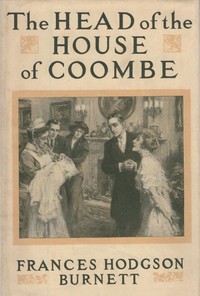
Reading Ideala reminded me of evenings spent under a quilt, margins filling with pencil as I chased a mind that refused to settle. That provisional voice—always questioning its own conclusions—felt like an old friend. Frances Hodgson Burnett’s The Head of the House of Coombe — Themes and Context stirred the same quiet ache: women learning to think beyond the rooms they were given.
There are no reviews for this eBook.
There are no comments for this eBook.
Reader reflection
How will you remember this book?
Save your reaction, strongest insight, and memorable passage.
Your progress
0
/
10
2
How much did you enjoy the reading experience?
3
Would you recommend this book to another reader?
4
How much effort did this book require?
5
Did this book create an emotional response?
6
How would you describe its reading pace?
7
How understandable was the text?
8
Could you apply anything you learned?
9
What did this book teach you most?
10