1

From Wealth to Poverty; Or, the Tricks of the Traffic. A Story of the Drink Curse — Edition Insights
(0 User reviews)
1342
Project Gutenberg
2004
Not confirmed
Temperance -- Fiction
Readers of public-domain and historical texts
Project Gutenberg digital edition
en
Edition facts
Words
83,540
Reading time
364 min
Text sections
7
This digital edition of From Wealth to Poverty; Or, the Tricks of the Traffic. A Story of the Drink Curse — Edition Insights is described by source-level measurements including 83,540 words, 6 hr 4 min estimated reading time, and 7 detected text sections.
The text analysis averages about 25.1 words per sentence, while the detected sections provide another way to judge how the source is divided.
Project Gutenberg metadata also associates the work with “Temperance -- Fiction,” connecting these edition facts with the source record’s subject description.
Source:
Project Gutenberg record #6907
A temperance novel exposing the liquor trade's tactics to undermine the Dunkin Act, based on the author's observations in 19th-century Ontario. The narrative follows conspirators plotting to flood a county with whiskey and discredit prohibition through legal delays and public manipulation.
Editorial Edition Score
4.7/5
★★★★★
★★★★★
Calculated from edition completeness, EPUB availability, text structure and catalogue metadata. Not a user rating.
How this score is calculated
- Description quality20 pts
- Title & short description10 pts
- Source metadata20 pts
- Text length15 pts
- Chapters / structure15 pts
- EPUB file integrity20 pts
Total of 100 points, scaled to a 2.5-5.0 range. Editions with an empty description or a missing EPUB file are not scored.
Edition quality
Read the Text
CHAPTER I. A Departure.
CHAPTER II. Richard and Ruth Ashton.
CHAPTER III. On the down grade.
CHAPTER IV. Sail for America and meet a kindly welcome.
CHAPTER V. Good resolution--A tempter and a fall.
CHAPTER VI. Arrival in Canada--A friendly host--Applies for a situation.
CHAPTER VII. Mr. and Mrs. Gurney.
CHAPTER VIII. Ashton meets with friends and secures a situation.
CHAPTER IX. Ruth's misgivings and mental agony.
CHAPTER X. All in Canada.
CHAPTER XI. Aunt Debie and her friends.
CHAPTER XII. A worthy Sheriff and Judge--Dr. Dalton.
CHAPTER XIII. Ruth Ashton's introduction to Aunt Debie--Ruth's dilemma.
CHAPTER XIV. A happy home.
CHAPTER XV. Mr. and Mrs. Gurney's satisfaction with Ashton-- Mutual congratulations.
CHAPTER XVI. Ashton revisits old scenes.
CHAPTER XVII. Mr. Howe gives his views in regard to Canada.
CHAPTER XVIII. The banquet, and what followed.
CHAPTER XIX. A startling newspaper item to Mr. and Mrs. Reid.
CHAPTER XX. A base plot, and what it led to.
CHAPTER XXI. Utterly broken--Blasted hopes.
CHAPTER XXII. The Dunkin Act--A discussion in which strong language is used.
CHAPTER XXIII. The conspirators formulating their scheme.
CHAPTER XXIV. Alderman Toper's flattering opinion of the "Dodger".
CHAPTER XXV. The friends of temperance rejoicing over their victory.
CHAPTER XXVI. In which the reader listens to a _tete-a-tete_ between mother and daughter.
CHAPTER XXVII. Barton's despair, and what it led to.
CHAPTER XXVIII. The conspirators perfecting the details of their conspiracy.
CHAPTER XXIX. Mr. Brown's opinion of the trial, and the presiding magistrates.
CHAPTER XXX. The insult to Allie Ashton--Her gallant defender.
CHAPTER XXXI. Richard Ashton and little Mamie--Mamie's dream.
CHAPTER XXXII. A bar-room settlement of a misunderstanding.
CHAPTER XXXIII. The home and family of Morris--He nearly kills little Harry.
CHAPTER XXXIV. Tom Flatt's hut--A description of the scene in which he murders his wife.
CHAPTER XXXV. John, jun.'s wedding--Barton's murder--Luella Sealy's suicide and Ginsling's tragical death.
CHAPTER XXXVI. Some of the characters who helped the repeal-- A hoodlum's victory.
CHAPTER XXXVII. Death of little Mamie--A promise.
CHAPTER XXXVIII. Richard Ashton murderously attacked--His death.
CHAPTER XXXIX. Mr. Gurney speaks his mind--Death of Dr. Dalton And Aunt Debie.
CHAPTER XL. Conclusion.
"Richard, you will keep from drink, will you not, dear?" and the speaker, in order to make her pleading irresistible, kissed the one to whom these words were addressed again and again; and, as with a hand upon each shoulder, she looked lovingly into his eyes, there was an added pathos which, to a man of Richard Ashton's sympathetic and sensitive nature, was all powerful.
"Well, Ruth, dear, God helping me, I will again be a man, and when I am tempted I will think of my dear little wife and my darling children at home; and remembering how they love me, though I have been such an indifferent husband and father to them, I will not touch nor taste the cursed stuff."
The tears gleamed in his eyes as he thus spoke, but feeling his manhood was being compromised he endeavored to suppress them, the effort, however, was in vain, for the deepest depths of a noble, sensitive nature had been wrought upon by the loving appeal of his wife and the pent-up feeling, gathering force by the very effort which he had made to suppress it, manifested itself in a series of short, choking sobs. He returned the kisses of his wife, clasped her convulsively to him, and, as he looked down into the upturned face, his eyes manifested an affection which found no expression in speech. He stooped down and fondly kissed his children and then opening the door, with satchel in hand, he darted out, only looking back when his wife called to him, as she stood with her three little ones on the threshold--
"Remember, Richard, your wife and children will pray for you, that our Father in heaven may preserve you from danger, give you strength to resist temptation, and bring you back in safety to those who love you better than their own lives."
He stood looking back for a moment, and as he saw his wife and children still gazing intently after him, he murmured, "God bless you, my darlings;" and turning again, walked rapidly on until he was lost to view.
RICHARD AND RUTH ASHTON.
Richard Ashton was a native of the town of G----, in the county of B----, England. His father, who was a draper in good circumstances, had given his son a liberal education and had brought him up to his own calling. The son, a young man of quick parts, took advantage of the opportunities so generously offered to him and prosecuted his studies with commendable success, and by the time he was a stripling of sixteen was possessed of knowledge that few of his years could boast.
The novel opens with a conspiracy meeting where liquor sellers plan to render the Dunkin Act ineffective. Rivers, a key figure, outlines a strategy of legal appeals and flooding the county with whiskey, aiming to provoke a public cry that the Act is a failure. The dialogue reveals a calculated contempt for the law, with characters like Bottlesby asserting that many voters support temperance only because it is fashionable. The author, drawing on personal experience across three counties, frames the narrative as an exposé of the 'unprincipled measures' employed by the liquor party.
Conspiracy and Legal Maneuvering
The central plot device is a meeting of the Licensed Liquor Sellers' Association, where Rivers proposes a 'waiting game.' The conspirators plan to exploit weak justices of the peace, appeal convictions, and keep the county saturated with alcohol during legal delays. The dialogue is laced with cynical calculations: Rivers boasts that the Association will spend a hundred thousand dollars to defeat the Act, while Bottlesby predicts that the public will soon join the cry of failure. This section reveals the novel's structural reliance on extended conversations to expose the mechanics of corruption.
Recurring Images of Drunkenness and Revelry
The author repeatedly contrasts the conspirators' sober calculation with the chaos they intend to create. At the meeting's end, only the landlord remains sober, described as 'too mean to drink to any excess except he drank on the treats of his numerous customers.' This image of self-interested sobriety amid planned debauchery recurs throughout the excerpts. The conspirators aim to make the county 'a perfect pandemonium of drunkenness and revelry,' a phrase that underscores the novel's moral geography: the liquor traffic is depicted as a deliberate agent of disorder.
The Role of the Dunkin Act and Its Opponents
The Dunkin Act serves as the legal backdrop, a prohibition law that the liquor party seeks to discredit. The author's preface states that the data came from personal observation in counties where the Act was in force, and that similar plots may obstruct the Scott Act. The novel thus functions as a warning: the conspirators' tactics—bribery, legal obstruction, and public manipulation—are presented as a template for undermining temperance legislation. The excerpts show no scenes of the Act's supporters; the focus remains on the plotters' strategies.
Voice and Dialogue as Structural Device
The narrative relies heavily on dialogue to advance the plot and convey the liquor party's mindset. Characters like Rivers, Bottlesby, and Alderman Toper speak in long, argumentative turns, outlining their schemes with a blend of bravado and pragmatism. The author uses these exchanges to dramatize the 'tricks of the traffic,' as the subtitle promises. The dialogue is often laced with legal and political jargon—'sub judice,' 'appeal,' 'repeal'—grounding the conspiracy in the specifics of 19th-century Canadian law. This technique gives the novel a documentary quality, though the excerpts offer no scenes of the promised downfall from wealth to poverty.
Readers should approach this novel as a partisan document, one that prioritizes exposing the liquor trade's machinations over character development or narrative arc. The excerpts provide no glimpse of the titular descent from wealth to poverty; instead, they focus on the conspirators' planning. The book's value lies in its detailed depiction of how prohibition laws were resisted, making it a historical artifact of the temperance movement's rhetorical strategies.
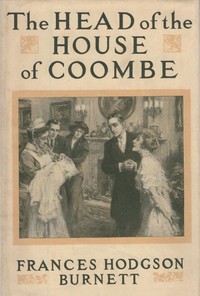
There's something about the way that old temperance story traces how well-meaning people get quietly undone by influence—how the drinking itself becomes the least of it. The Head of the House of Coombe — Themes and Context reminded me of that same lingering ache, watching privilege shape a child's world without anyone naming it. Both left me sitting still afterward, thinking about the weight of unseen choices.
There are no reviews for this eBook.
There are no comments for this eBook.
Reader reflection
Take a moment to reflect on this book
Create a short personal record of your experience with this book.
Your progress
0
/
10
2
How did the book work for you overall?
3
Would you encourage someone else to read it?
4
How much effort did this book require?
5
How distinctive were its ideas or approach?
6
Could you apply anything you learned?
7
Did you relate to its people, ideas, or situations?
8
Which aspect of the book did you value most?
9
What is the main idea you are taking away?
10