
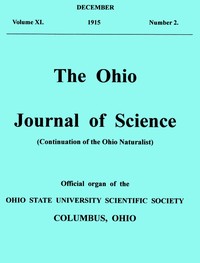
The Ohio Journal of Science. Vol. XVI., No. 2 (December, 1915) by Various
Let's be clear: this isn't a novel. The Ohio Journal of Science, Vol. XVI, No. 2 is a collection of professional research papers published in December 1915. There's no main character or plot twist. Instead, it's a snapshot of scientific inquiry in one American state at a specific moment in history. You'll find studies on the geology of specific Ohio counties, detailed lists of local plant species, and investigations into electrical phenomena. The authors are professors, field researchers, and curious experts sharing their latest findings with peers.
The Story
There is no traditional story. The 'narrative' is the collective pursuit of knowledge. One paper meticulously catalogs the mosses found in a particular ravine. Another analyzes the chemical composition of a newly discovered mineral. A third examines the effects of an electrical current on plant growth. Reading them back-to-back, you build a picture of a scientific community focused on understanding its immediate world—the soil, the flora, the physical principles at play in their labs and fields. The context of 1915, with a world war underway, is almost entirely absent, which in itself tells a story about the compartmentalization of academic life at the time.
Why You Should Read It
I loved this for its atmosphere. The dry, formal language of the papers creates a weirdly compelling vibe. You're not reading for thrilling conclusions (though some are surprisingly prescient), but for the mindset. It's humbling. These folks were doing real, careful work with the tools they had. Some conclusions feel outdated, but the meticulous observation and dedication do not. It made me think about what we take for granted today and what fundamental questions we're still asking. It's less about the specific facts and more about the act of looking closely at the world.
Final Verdict
This is a niche read, but a rewarding one. It's perfect for history buffs who want primary sources, for science teachers looking for examples of 'period' research, or for anyone who enjoys browsing antique shops for old textbooks. It's not for someone seeking a page-turner. Think of it as a museum exhibit in book form—best enjoyed in short sessions, letting the quiet voice of 1915 science wash over you. If the idea of reading a century-old lab report sounds intriguing, not tedious, you'll find a strange magic in these pages.
This is a copyright-free edition. Preserving history for future generations.
Anthony Moore
9 months agoAmazing book.


Ethan Taylor
8 months agoSolid story.