
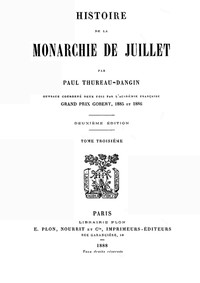
Histoire de la Monarchie de Juillet (Volume 3 / 7) by Paul Thureau-Dangin
Paul Thureau-Dangin's third volume picks up the story of France's July Monarchy in the 1840s. King Louis-Philippe, the "Citizen King," has been on the throne for over a decade. The initial revolutionary fervor that brought him to power has cooled, replaced by a government focused on business, order, and avoiding war at all costs. The book follows the political battles in the Chamber of Deputies, the king's struggle to manage a fractured country, and the growing discontent among workers, intellectuals, and political reformers who feel left behind by the regime's cautious policies.
The Story
This isn't a novel with a single hero, but the story of a nation at a crossroads. Thureau-Dangin guides us through a critical decade. We see the government, led by figures like François Guizot, becoming more rigid, defending a narrow political system that shuts out the middle class. We follow the rise of a vocal opposition, from republicans dreaming of 1789 to liberals demanding electoral reform. Meanwhile, economic troubles and scandals chip away at public trust. The narrative builds a powerful sense of a political class growing disconnected from the people it governs, all while believing it's doing what's best for France's peace and prosperity.
Why You Should Read It
What makes this history so compelling is its humanity. Thureau-Dangin doesn't just list laws and battles; he shows you the personalities and the pressures. You get a feel for Louis-Philippe's stubborn optimism and Guizot's intellectual arrogance. You see how good intentions—keeping France out of costly wars, maintaining stability—can slowly harden into a refusal to change, even when change is desperately needed. Reading this volume, you understand not just what happened, but how it happened. You see the quiet moments where different choices could have been made, and you feel the gathering storm of the 1848 Revolution that will erupt in the next volume.
Final Verdict
This book is perfect for history lovers who enjoy political drama and want to understand the 'why' behind major events. It's for readers who like biographies of nations, not just individuals. While it's part of a larger series, this volume stands on its own as a masterclass in explaining how governments lose their way. Be prepared for detailed political analysis, but Thureau-Dangin's clear prose makes a complex era accessible. If you've ever been fascinated by how societies fracture, this is a brilliant, insightful look at one of history's great examples.
This text is dedicated to the public domain. Thank you for supporting open literature.
Kenneth Allen
10 months agoMy professor recommended this, and I see why.
Michael Robinson
3 months agoNot bad at all.








Andrew Davis
1 year agoA bit long but worth it.