
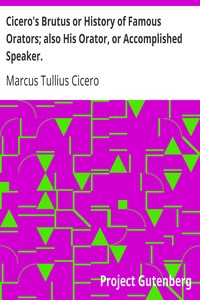
Cicero's Brutus or History of Famous Orators; also His Orator, or Accomplished…
So, what's this nearly 2,100-year-old book actually about? Let's break it down.
The Story
The book is really two works in one. The first part, the Brutus, is structured as a dialogue. Cicero is grieving the recent death of another legendary orator. To cope, he meets with his friend Atticus and Marcus Brutus (yes, that Brutus). Their conversation becomes a complete history of Roman public speaking. Cicero acts as a tour guide, walking through almost 200 years of history, naming names and critiquing styles. It's part biography, part critique, and part eulogy for a lost art form.
The second part, the Orator, is different. Here, Cicero drops the dialogue and writes directly to Brutus. He's no longer just listing historians; he's on a mission. He tries to describe the perfect orator—the ideal speaker who can handle any case, any crowd, with wisdom, style, and overwhelming skill. He argues this ideal combines sharp logic, emotional understanding, and captivating delivery. It's his blueprint for the ultimate communicator.
Why You Should Read It
You might think a book on ancient rhetoric sounds dry, but I found it gripping. First, it’s a front-row seat to Roman intellectual life. You get Cicero's unfiltered opinions on everyone who was anyone. It's gossipy and profound at the same time.
More importantly, the core questions Cicero wrestles with are still the questions we ask today. What makes a leader's speech resonate? Is great communication a natural gift or a learned skill? Reading this, you'll start to hear echoes of Cicero in modern politics, TED Talks, and even courtroom dramas. He makes you realize that the tools of persuasion haven't changed much, even if our forums have.
Final Verdict
This isn't a light beach read. It requires a bit of focus, but it's absolutely worth the effort. It's perfect for history buffs who want to go beyond battles and emperors to understand Roman thought. It's also great for anyone fascinated by politics, law, or leadership. Writers and speakers will find a treasure trove of timeless advice on structure and style. If you've ever enjoyed a great debate or been moved by a powerful speech, this book shows you the ancient foundations of that art. Think of it less as a textbook and more as a conversation with one of history's greatest minds about the power of a well-chosen word.
You are viewing a work that belongs to the global public domain. Feel free to use it for personal or commercial purposes.



Mary Robinson
5 months agoIf you enjoy this genre, the author's voice is distinct and makes complex topics easy to digest. Absolutely essential reading.