
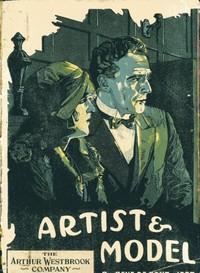
Artist and Model (The Divorced Princess) by René de Pont-Jest
Let me set the scene for you: Paris in the late 1800s, a time of gaslights and grand ambitions. Our main character is a talented but struggling painter named Armand. His career needs a spark, and he finds it—or rather, she finds him—in the form of the breathtaking Princess Vera. She’s a Russian noblewoman who has just escaped a miserable, high-profile divorce and arrives in Paris shrouded in gossip.
The Story
Armand hires Vera as his model, and at first, it’s a professional dream. She’s his perfect muse, and his paintings of her become the talk of the town. But the canvas can’t hide everything. Vera is deeply wounded by her past, and Armand finds himself falling for her, not just as an artist but as a man. Their relationship shifts from the studio to his private life, getting messier by the day. The plot thickens when figures from Vera’s old life—a jealous ex-husband, political schemers from Russia—start reappearing, threatening the fragile new world they’ve built. The book asks: Is Armand saving Vera, or is he trapping her in a new kind of gilded cage? Is her portrait a celebration of her freedom, or just another possession?
Why You Should Read It
Forget dry history—this book feels alive. Pont-Jest, who was writing in the era he describes, captures the energy of a changing Paris. What really got me was the twisted power dynamic. It’s not a simple romance. Armand’s ‘creation’ of Vera on canvas mirrors his desire to control her story off of it. Vera is fascinating because she’s fighting to own her narrative after a life of being defined by men—first her husband, now perhaps her artist-lover. The tension isn’t just about will-they-won’t-they; it’s about whether two people from such different worlds can ever truly see each other as equals, or if they’re doomed to be forever artist and model.
Final Verdict
This is a perfect pick for anyone who loves historical drama with bite. If you enjoyed the emotional twists of books like The Age of Innocence or the atmospheric setting of Perfume, you’ll sink right into this. It’s also great for readers who like complicated, flawed characters—neither Armand nor Vera are purely heroic, which makes them feel real. Fair warning: it’s a product of its time in some attitudes, but that also makes it a fascinating window into 19th-century mindsets about art, gender, and class. Grab a cup of coffee (or a glass of wine), settle in, and get ready for a passionate, messy trip to old Paris.
This text is dedicated to the public domain. You do not need permission to reproduce this work.
Mark Miller
2 months agoThis is one of those stories where the arguments are well-supported by credible references. I will read more from this author.







Barbara Nguyen
1 year agoHaving read this twice, the depth of research presented here is truly commendable. Don't hesitate to start reading.